

Georgia’s protected areas continue to attract visitors from the country and abroad. Around 900,000 visitors traveled to these destinations during the first nine months of 2026. Nature-based travel is also becoming an important part of Georgia’s tourism sector.
According to the latest data from the Agency of Protected Areas of Georgia, around 900,000 visitors traveled to protected areas during the first nine months of 2026. The Agency’s revenue also increased by 48% compared with the same period of the previous year.
The figures were presented on September 28, 2026, during a meeting of the Environmental Protection and Natural Resources Committee of the Parliament of Georgia.
Protected Areas in Georgia Welcome 900,000 Visitors
The latest figures show strong visitor activity at Georgia’s protected areas.
During the first eight months of 2026, the total number of visitors reached 849,448. This included 505,209 international visitors.
International visitor numbers during the three summer months were also 5% higher than during the same period of 2025.
Travel News previously reported on these figures in the article 849,448 Visitors Recorded in Georgia’s Protected Areas in the First Eight Months of 2026.
The number reached approximately 900,000 after the September figures were included. This keeps protected areas among the important components of Georgia’s nature-based tourism offer.
Which Protected Areas Are Most Popular?
Several destinations attract a large share of visitors.
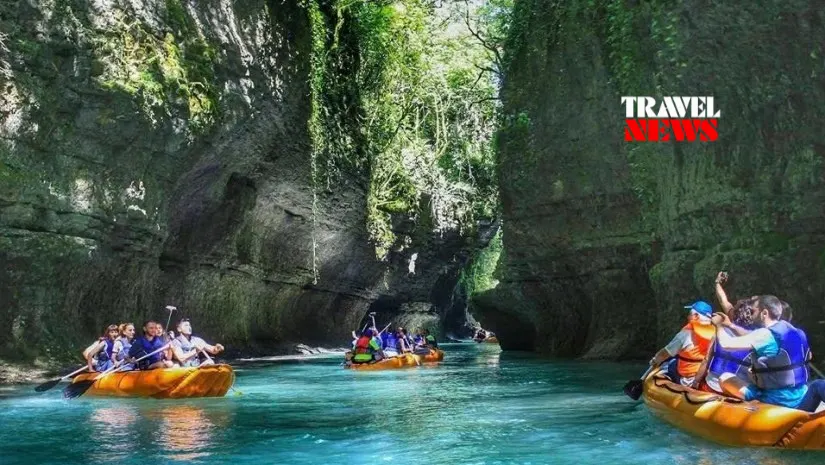
The most visited protected areas during the first eight months of 2026 included Prometheus Cave, Martvili Canyon, Mtirala National Park, Sataplia and Okatse Canyon.
Together, these five destinations accounted for 68% of all visitors during that period.
Many of these attractions are located in western Georgia.
Imereti is especially important for nature tourism. Prometheus Cave, Sataplia and Okatse Canyon are among the region’s best-known attractions.
Martvili Canyon is located in Samegrelo-Zemo Svaneti. Mtirala National Park is in Adjara.
The destinations offer different experiences. Visitors can explore caves, canyons, forests and national parks.
Ecotourism Development Continues
Visitor numbers are growing alongside new ecotourism projects.
The Agency of Protected Areas says that new ecotourism destinations and products have been added. Tourism infrastructure has also been improved. Information and road signs have been renewed across the system.
One example is the Tana Reserve.
Travel News recently reported on a project that will develop tourism infrastructure in the area. The plans include a visitor center, hiking trails, picnic and camping areas, tourist shelters and ranger stations.
Read more in Tourism Infrastructure to Be Developed in Tana Reserve.
Other protected areas are also receiving new infrastructure.
The Agency has highlighted the development and rehabilitation of visitor centers and recreational spaces. These projects are intended to improve visitor services and support ecotourism.
New Ecotourism Infrastructure in Georgia
The development of protected areas is not limited to visitor numbers.
New tourism infrastructure is also being planned in several locations.
In August 2026, the Agency signed contracts for infrastructure development in the Tana Reserve, Erusheti National Park and Kvereti Protected Area.
The projects include administrative buildings and visitor centers. They also include hiking trails, tourist shelters and ranger facilities.
These projects can improve access to less-developed destinations. They can also create new opportunities for nature-based tourism.
Travelers interested in hiking can explore Travel News’ guide to Autumn Trails in Georgia’s National Parks.
The guide covers trails in several parts of Georgia. These include Mtirala, Javakheti, Vashlovani, Lagodekhi and other protected areas.
Georgia Has 112 Protected Areas
Georgia’s protected-area network is also expanding.
According to the 2026 activity report, the country currently has 112 protected areas. They are managed through 25 territorial administrations.
Protected areas now cover 15.3% of Georgia’s territory. More than 800 people work within the system. Around 500 of them are rangers.
The Agency also reported that 12 new protected areas were established in 2026. Two existing protected areas were expanded.
The system is also using new monitoring technologies. These include SMART patrol systems and drones.
Biodiversity monitoring and forest restoration are also part of the Agency’s work.
For more information, travelers can explore the official Agency of Protected Areas of Georgia website.
Protected Areas Could Reach 16.4% of Georgia
The protected-area network is expected to expand further.
According to the Agency, ongoing projects could increase the total protected area by around 220,000 hectares.
The total area could reach approximately 1.15 million hectares. That would represent about 16.4% of Georgia’s territory.
Work is currently taking place in several regions. These include Racha-Lechkhumi and Kvemo Svaneti, Samegrelo-Zemo Svaneti, Kakheti and Imereti.
The expansion also has a connection with local tourism.
According to the Agency, around 700 hotels and 300 food establishments already operate near protected areas.
This creates links between nature tourism and local businesses.
Protected Areas and Tourism in Georgia
Protected areas are an important part of Georgia’s wider tourism offer.
Travelers can combine nature with other types of tourism. A trip can include hiking, local cuisine, cultural attractions and rural experiences.
This is particularly relevant for regional tourism.
Imereti, Samegrelo-Zemo Svaneti and Adjara already attract visitors with well-known natural attractions. Other regions are also developing new tourism products.
Travel News covers these destinations in its broader guide to Tourism in Georgia – Destinations, Attractions and a Complete Travel Guide.
The guide includes information about Georgia’s regions, attractions and different types of tourism.
Travel News has also explored the country’s broader opportunities in Georgia’s Tourism Potential – What Opportunities Does the Country Offer?.
Nature Tourism and Sustainable Development
The growth in visitor numbers also increases the importance of sustainable tourism.
Protected areas have two important functions. They protect natural ecosystems and provide opportunities for visitors to experience nature.
The Agency is continuing work on biodiversity monitoring, conservation and tourism infrastructure.
The challenge is to manage growing visitor demand while protecting natural resources.
This is especially important for popular destinations. Prometheus Cave, Martvili Canyon, Mtirala National Park, Sataplia and Okatse Canyon already receive a large share of visitors.
At the same time, new infrastructure can help develop less-known destinations.
A Growing Nature-Based Tourism Market
The latest figures show the growing role of protected areas in Georgia’s tourism sector.
Around 900,000 visitors traveled to protected areas during the first nine months of 2026. The Agency’s revenue was also 48% higher than during the corresponding period of the previous year.
The country is also expanding its protected-area network.
New destinations and tourism products are being developed. Visitor centers, trails and recreational facilities are being improved.
For travelers, this means more opportunities to explore Georgia beyond its major cities.
For the tourism industry, protected areas create connections between nature, accommodation, food, transport and local experiences.
Georgia’s protected areas therefore remain an important part of the country’s tourism development and ecotourism market.