


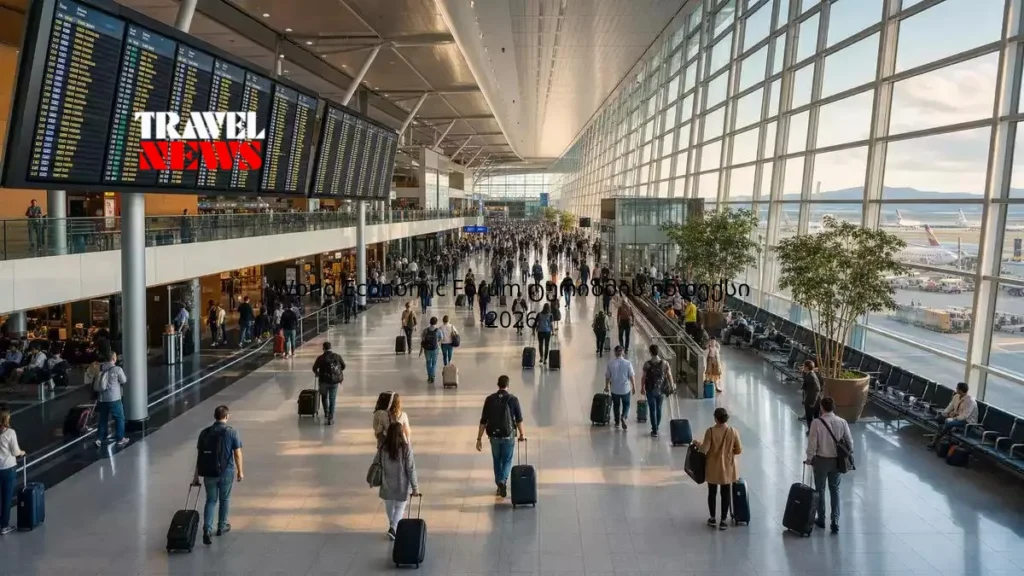
The Tourism Development Index 2026, published by the World Economic Forum (WEF), assesses the conditions for tourism development across 110 economies. Its findings explain why rising visitor numbers alone are no longer enough to measure a destination’s success.
The report highlights several challenges facing the global tourism industry, including rising travel costs, investment gaps, workforce shortages and the need to ensure that tourism generates lasting benefits for local communities.
For destinations such as Georgia, the findings offer an important perspective on tourism competitiveness. Attracting more visitors remains essential, but long-term success also depends on how effectively tourism creates economic value.
The report was developed by the World Economic Forum (WEF) in collaboration with Zurich Insurance Group.
Official report: World Economic Forum – Travel & Tourism Development Index 2026
World Economic Forum Travel & Tourism Development Index 2026: Key Findings
The 2026 index covers 110 economies and evaluates the conditions that support sustainable and resilient tourism development.
Between 2024 and 2026, 101 of the 110 economies improved their scores. The average score increased by 2.1%, marking the fastest pace of improvement since 2019.
Progress was driven by improvements in cultural resources, tourism infrastructure and services, air connectivity and business travel.
However, the index does not directly measure which country attracted the most tourists or generated the highest tourism revenue. Instead, it evaluates the conditions and policies that enable destinations to develop tourism sustainably and remain competitive.
This distinction is important. An increase in visitor numbers can be a positive sign, but it does not provide a complete picture of a destination’s economic performance.
Japan Leads the 2026 Tourism Development Index
Japan ranked first in the 2026 index, followed by the United States, Spain, Australia and France.
The top five economies are:
- Japan
- United States
- Spain
- Australia
- France
Advanced economies continue to dominate the highest positions. Nine of the top 10 economies are advanced economies, with China the only exception. European countries account for six places in the top 10.
These results reflect the importance of more than tourism attractions alone. Transport infrastructure, visitor services, connectivity and the systems that support tourism businesses also influence a destination’s competitiveness.
Successful destinations need to combine attractive experiences with reliable infrastructure and effective management. These factors help them accommodate visitors while maintaining service quality and protecting the resources on which tourism depends.
Travel Is Becoming Less Affordable in Most Economies
One of the report’s key findings concerns the affordability of travel.
Between 2024 and 2026, travel and tourism-related prices became less competitive in approximately three-quarters of the economies included in the index.
Rising prices create challenges for both travellers and tourism businesses. Hotels, restaurants, transport companies and tour operators must manage operating expenses while remaining competitive.
Higher prices do not necessarily translate into higher profits. A tourism business may generate more revenue, but increased costs for staffing, energy, food and other services can reduce its profit margin.
This issue is relevant to Georgia as well. Accommodation costs influence the overall price of a trip and can affect how travellers choose where to stay.
Travel News has examined the premium accommodation segment in its article, TOP 5 Hotels in Tbilisi – Which Hotels Are the Most Expensive?.
For tourism businesses, the challenge is to maintain service quality and financial sustainability while offering prices that reflect both market conditions and customer expectations.
Investment and Workforce Shortages Remain Major Challenges
The WEF report identifies investment gaps and workforce shortages as important constraints on tourism development.
Since 2022, tourism investment has struggled to keep pace with the growth of tourism activity. At the same time, labour shortages and skills gaps threaten service quality and the sector’s ability to adapt to changing conditions.
As visitor numbers increase, demand also grows for accommodation, transport, infrastructure and qualified employees.
If investment and workforce capacity fail to keep pace, destinations may face pressure on services and infrastructure. Businesses can also find it harder to maintain consistent quality during busy periods.
Tourism development therefore requires more than marketing campaigns and efforts to attract visitors from new source markets.
Long-term investment, professional education, digital development and cooperation between the public and private sectors are also important.
Why More Tourists Do Not Automatically Mean Greater Benefits
One of the report’s central messages is that tourism growth does not automatically improve local prosperity or employment quality.
Although travel activity and visitor spending continue to grow, the economic and social value generated by tourism weakened between 2024 and 2026. Pressures associated with crowding and the concentration of visitors in particular places also remain a concern.
Large visitor flows can generate additional income. However, they can also put pressure on transport, residential areas, natural resources and municipal infrastructure.
The economic benefits of tourism also depend on where visitors spend their money, how long they stay and how much local businesses benefit from their visits.
This is particularly important for destinations where tourism is seasonal or concentrated in a small number of locations.
For a broader look at tourism’s economic contribution in Georgia, read Travel News’ analysis, Tourism’s Share of Georgia’s GDP: A 10-Year Review and Outlook to 2030.
The article examines tourism’s contribution to the national economy and explains why visitor numbers and international travel revenue alone do not tell the whole story.
Emerging Tourism Economies Are Gaining Ground
The WEF report also shows that emerging tourism economies are improving their competitiveness.
Since 2019, the 10 largest emerging tourism economies have improved their index scores more than twice as fast as the top 20 economies.
Asia-Pacific has been a particularly important driver of this progress. Seven of the 10 fastest-improving economies between 2024 and 2026 were in the region.
Albania recorded the largest overall improvement in the index during this period.
These findings demonstrate that traditional tourism leaders are not the only destinations capable of strengthening their position. Emerging markets can also improve their competitiveness through investment, better connectivity, stronger services and effective tourism management.
For Georgia, these developments underline the importance of monitoring international markets and adapting tourism products to changing demand.
Travel News explored this issue in its analysis, Georgia Tourism Markets in 2026 – Europe and China on the Rise.
The article examines how visitor trends differ across source markets and why international travel revenue should be analysed alongside visitor numbers.
What the Index Means for Georgia’s Tourism Industry
The WEF report does not, by itself, establish Georgia’s individual position or performance across the index. A country-specific assessment requires examination of Georgia’s scores and results across the relevant indicators.
However, the report highlights several priorities that matter for Georgia’s tourism industry.
Improving service quality and accessibility
Attractive destinations need reliable infrastructure, accessible services and a positive visitor experience. These factors help businesses build their reputation and encourage visitors to recommend destinations to others.
Reducing seasonality
Tourism demand is often concentrated in particular months and locations. Developing year-round tourism products and encouraging visitors to explore more regions could help businesses generate more stable revenue.
Investing in skills and infrastructure
Sustainable growth requires qualified employees, modern services and infrastructure capable of accommodating visitors without placing excessive pressure on local communities.
Diversifying international markets
Monitoring source markets helps tourism businesses understand where demand is growing and identify potential opportunities. However, market decisions should also consider visitor spending, length of stay and customer preferences.
Increasing the local economic benefits of tourism
Tourism can create opportunities for hotels, restaurants, guides, transport providers, wineries and other local businesses. Stronger links between tourism companies and local suppliers can help distribute the benefits more widely.
These priorities are especially relevant to Georgia’s regions, where tourism can support employment, small businesses and local economic development.
The Future of Tourism: From Visitor Numbers to Value
The World Economic Forum’s Travel & Tourism Development Index 2026 suggests that global tourism is entering a new phase. Tourism development conditions have improved across most economies, but rising costs, investment gaps, workforce shortages and sustainability pressures remain significant challenges.
The report’s message is clear: a destination’s competitiveness depends not only on how many visitors it attracts, but also on its infrastructure, service quality, resilience and ability to generate lasting economic and social benefits.
For Georgia, this means assessing tourism performance through several indicators, including visitor numbers, international travel revenue, business sustainability, service quality and the benefits reaching local communities.
Attracting more tourists remains an important goal. But long-term success depends on how effectively visitor flows are converted into lasting economic value.
Sources and Further Reading
- World Economic Forum – Travel & Tourism Development Index 2026
- World Economic Forum – Tourism Conditions Improve Across Most Economies, Despite Global Headwinds
Travel News – Tourism Partner Media