


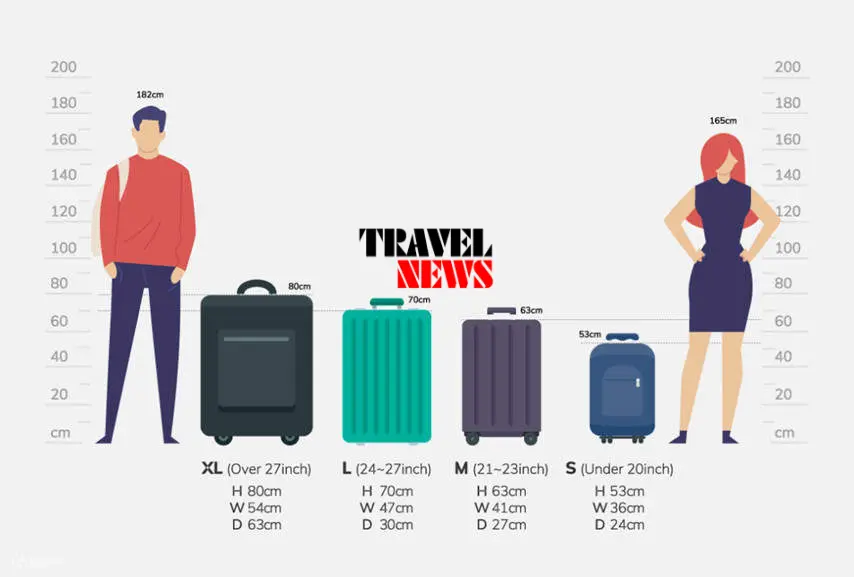
Airline carry-on baggage size restrictions vary between carriers and may depend on the airline, flight route, ticket type and travel class. Before starting your journey, it is important to check the airline’s current baggage rules, especially the permitted carry-on size, weight and personal-item allowance.
What should you check about airline carry-on baggage size restrictions?
There is no single international standard size for carry-on baggage. Airlines set their own maximum dimensions, and these usually include wheels and handles.
For example, American Airlines allows carry-on bags up to 22 × 14 × 9 inches (56 × 36 × 23 cm), including wheels and handles.
KLM allows carry-on baggage with maximum dimensions of 55 × 35 × 25 cm, including wheels and handles. The airline also sets a weight limit, which can vary depending on the ticket type and travel class.
This means that if you are traveling with different airlines, the same suitcase may not necessarily meet the carry-on requirements for every flight.
What is the carry-on baggage weight limit?
Carry-on baggage weight limits vary between airlines. Some carriers specify a maximum weight, while others focus primarily on whether the passenger can safely place the bag in the overhead compartment.
For example, KLM allows a combined maximum weight of 12 kg for a small bag and carry-on baggage in Economy Class.
Other airlines may have different requirements, so passengers should check the baggage conditions for their specific flight before traveling.
In addition to baggage size, passengers should also pay attention to possible baggage fees. For more information, read our article “Airlines May Remove Carry-On Baggage Fees.”
What is a personal item?
A personal item is a smaller bag that is different from your main carry-on. It usually needs to fit underneath the seat in front of you.
Examples of personal items include:
- a small backpack;
- a handbag;
- a laptop bag;
- a small briefcase.
For example, American Airlines allows a personal item up to 18 × 14 × 8 inches (45 × 35 × 20 cm), which must fit under the seat in front of the passenger.
Keep in mind that personal-item dimensions and whether an additional personal item is included in the ticket price may vary depending on the airline and fare type.
What can you take in your carry-on?
Security rules apply to items carried on board, particularly liquids, aerosols, gels and certain electronic or hazardous items.
In the United States, TSA’s rules for liquids, gels and aerosols follow the so-called 3-1-1 rule. Each container must hold no more than 3.4 ounces (approximately 100 ml), and these containers should be placed in one transparent, approximately one-quart, resealable bag.
Certain items are subject to additional restrictions. Passengers should also check the applicable security rules for their departure airport and destination.
Special rules and exceptions may apply to medicines, baby food, breast milk and other essential items. Checking the relevant airport and airline requirements in advance is therefore recommended.
Is there an international standard carry-on size?
Airline carry-on baggage size restrictions are not based on one universal international standard. As a result, maximum dimensions can vary significantly between airlines.
For example, American Airlines allows carry-on baggage up to 22 × 14 × 9 inches, while KLM’s maximum dimensions are 55 × 35 × 25 cm.
For this reason, a suitcase labeled “Cabin Size” or “Carry-on Size” should not automatically be assumed to meet the requirements of every airline. Always check the official baggage rules of the airline operating your flight.
What should you check before your flight?
Before traveling, pay attention to four key points:
- Maximum carry-on size – Check the permitted height, width and depth.
- Carry-on weight – Check the weight limit for your airline and fare.
- Personal-item allowance – Find out whether you can bring an additional small bag.
- Restricted and prohibited items – Pay particular attention to liquids, aerosols, gels, batteries and other regulated items.
If you are planning a trip to Georgia, you can also read our guide to Georgia’s tourism potential and travel opportunities.
Finally, always check your airline’s official website before departure, as baggage policies can change and may differ depending on the fare, route and travel class.