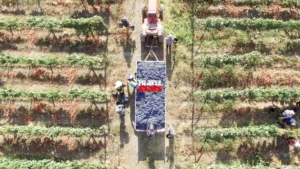



Agritourism in Georgia is a tourism segment that brings together rural life, agriculture, local products, Georgian cuisine, wine and authentic travel experiences.
Georgia’s regions offer significant resources for agritourism, including vineyards, farms, family-run agricultural businesses, wineries, local food products and traditional rural lifestyles.
Today, agritourism is much more than simply visiting a farm. For modern travelers, it can include tasting locally produced food, wine tasting, participating in the grape harvest, learning about farming, joining a cooking class or simply enjoying the peaceful environment of rural Georgia.
What Is Agritourism?
Agritourism is a form of tourism that connects travelers with agriculture, farming activities, local products and rural life.
Its main value is that visitors are not simply observers. They can experience local activities directly and discover a way of life that is different from a conventional sightseeing trip.
Agritourism can also be particularly important for rural communities. A visitor’s spending can benefit not only one tourism business, but also local restaurants, accommodation providers, farmers, transportation services and producers.
Agritourism in Georgia – Why Does Georgia Have Strong Potential?
Georgia has a combination of natural, agricultural and cultural resources that creates strong potential for agritourism.
In Kakheti, agritourism is particularly connected with vineyards, wine and family wineries. In Imereti, Racha, Guria, Samegrelo and Adjara, tourism experiences can be built around local agricultural products, traditional farming practices and regional cuisine.
For a broader overview of Georgia’s destinations and tourism experiences, see Travel News’ guide to Tourism in Georgia – Destinations, Attractions and a Complete Travel Guide.
The main advantage of agritourism in Georgia is regional diversity. Different parts of the country can offer travelers completely different agricultural, culinary and cultural experiences.
Agritourism in Georgia, Wine and Georgian Cuisine
Agritourism becomes particularly interesting when combined with wine tourism and gastronomy.
A farm, vineyard, winery, local food and Georgian hospitality can become one integrated tourism experience.
Travel News’ guide to Wine Tourism in Georgia – Wineries, Regions and Wine Tours explores Georgia’s wine regions, wineries and wine-related travel experiences in greater detail.
The connection with food is equally important. Our guide to Gastronomy Tourism in Georgia – Georgian Cuisine and Flavors covers regional cuisine, local products, culinary experiences and the relationship between food and tourism.
For a traveler, the experience can go beyond tasting a finished product. Visitors can see how wine is produced, how cheese is made, how grapes are harvested or how a traditional Georgian dish is prepared.
Agritourism in Georgia and Local Farmers
The development of agritourism can create an additional source of income for small agricultural producers.
Instead of selling products only through wholesale or retail channels, a farmer can also create a tourism experience around the farm.
A farm can offer visitors:
- farm tours;
- tastings of local products;
- cooking classes;
- participation in seasonal agricultural activities;
- an introduction to farming practices;
- picnics or meals;
- family accommodation;
- direct sales of local products.
In this model, the traveler becomes more than a consumer. They become part of the local community and rural economy for the duration of their visit.
Agritourism in Georgia and Global Tourism Trends
The development of agritourism and rural tourism is not unique to Georgia.
UN Tourism considers rural tourism an important tool that can contribute to rural development, local economic opportunities, cultural preservation and community well-being.
UN Tourism’s Best Tourism Villages initiative is another example of the growing international focus on rural destinations.
In 2025, the Best Tourism Villages programme received more than 270 applications from 65 countries and selected 52 villages. Following the addition of the new members, the network included 319 villages.
These figures demonstrate the growing importance of rural destinations within the international tourism agenda.
UN Tourism and FAO have also highlighted the connection between agriculture, cultural heritage and tourism. Their 2025 discussion on agritourism emphasized how tourism experiences based on traditional farming systems can support communities while helping preserve landscapes, biodiversity and cultural traditions.
Agritourism and Agriculture – Why Is the Connection Important?
The direct connection with agriculture is what makes agritourism different from many other forms of tourism.
The tourism product is created in the same environment where real agricultural activity takes place.
This can include:
- vineyards;
- orchards;
- livestock farms;
- beekeeping;
- vegetable farms;
- nut production;
- cheese production;
- other locally produced agricultural products.
Such experiences can be particularly attractive to international travelers who want to understand a country’s culture and everyday life more directly.
How Important Is Agritourism for Georgia’s Tourism Industry?
Agritourism is increasingly relevant to Georgia’s broader tourism offering because it can connect several different tourism products.
A single experience can include agriculture, wine, gastronomy, rural accommodation, nature and cultural tourism.
For official tourism research and statistics, Travel News readers can also consult the Georgian National Tourism Administration’s research section.
Georgia’s tourism potential is broader than any single tourism product. Travel News has examined this subject in Georgia’s Tourism Potential – What Opportunities Does the Country Offer?, including rural tourism, wine, gastronomy, nature and regional development.
The Global Agritourism Market
It is difficult to establish one universally accepted figure for the global agritourism market because different research companies use different definitions and include different tourism products and services.
For this reason, commercial market-size estimates can vary considerably.
A more useful approach is to look at the broader international trend.
Rural tourism and agritourism are increasingly viewed as tools for diversifying rural economies, promoting local products, creating additional income opportunities and protecting cultural and agricultural heritage.
UN Tourism’s work on agritourism also emphasizes the potential created by connecting farming, culture and tourism.
What Does a Traveler Get from Agritourism?
The main value of agritourism is the experience itself.
A traveler can:
- visit a working farm;
- taste locally produced food;
- discover traditional agricultural methods;
- participate in the grape harvest or other seasonal activities;
- visit a family winery;
- learn how to prepare a traditional dish;
- stay in a rural environment;
- meet a local family and learn about their way of life.
These experiences are particularly attractive to travelers looking for authentic, local and more personal forms of tourism.
Agritourism in Georgia and Four-Season Tourism
One of the major advantages of agritourism is its seasonal diversity.
In spring, visitors can explore gardens, vineyards and the countryside.
Summer can offer farm visits, local products and rural relaxation.
Autumn is particularly important in Georgia because of the grape harvest and wine tourism.
In winter, agritourism businesses can focus more on local cuisine, wine, family hospitality and the peaceful rural environment.
This means agritourism can become one component of Georgia’s four-season tourism offering.
Wine and Agritourism in Georgia
Wine tourism is one of the most natural partners of agritourism.
A vineyard, farm, winery and local cuisine can be combined into one experience.
The international promotion of Georgian wine also demonstrates the importance of this connection. In 2025, Georgian wine was promoted in 21 countries.
Travel News has covered this subject in the article Georgian Wine Promotion Took Place in 21 Countries in 2025.
For international visitors, wine tourism can therefore become much more than a tasting. It can include vineyards, agricultural traditions, local food, family wineries and interaction with winemakers.
Agritourism in Kakheti and Georgia’s Wine Regions
Kakheti is one of the most important regions for agritourism in Georgia.
Agriculture, viticulture, wine production, Georgian cuisine, historical heritage and rural tourism come together in the region.
Visitors can explore vineyards, participate in the grape harvest, visit family wineries, taste wine and discover local dishes.
Wine-related events can further strengthen this tourism experience.
For example, the Gurjaani Wine Festival 2026 provides an opportunity to experience Georgian wine culture, local producers and the broader wine tourism environment of Kakheti.
However, Georgia’s agritourism potential extends beyond Kakheti. Imereti, Racha, Guria, Samegrelo, Adjara and other regions can develop tourism experiences based on their own agricultural products, cuisine and traditions.
Agritourism and Small Wineries
For small family wineries, agritourism can create an additional business opportunity.
A winery does not have to remain simply a place where wine is produced. It can also become a destination where visitors meet the winemaker, see the vineyard, learn about traditional production methods and taste local products.
This type of direct interaction can be particularly valuable for travelers looking for authentic experiences.
The business environment and regulatory framework are also important for small wineries. Travel News has covered this issue in Certification Fees for Small Wineries to Be Waived – What Will Change.
Examples of Agritourism in Georgia
Examples of agritourism can be found across Georgia in family farms, wineries, rural guesthouses and regional tourism businesses.
The strongest future tourism products are likely to be those that combine several elements at once:
- agriculture;
- local products;
- tourism services;
- food;
- accommodation;
- educational experiences;
- cultural heritage.
This model can make rural tourism more competitive, diverse and attractive to both domestic and international travelers.
What Does Agritourism in Georgia Need to Develop?
Natural resources alone are not enough to develop a successful agritourism sector.
Georgia needs:
- Better tourism infrastructure;
- Improved roads and signs leading to rural destinations;
- Higher service standards;
- Better foreign-language communication;
- Online booking and accessible information;
- Well-designed tourism products;
- Digital marketing;
- Cooperation between farmers and tourism businesses;
- Regional tourism routes;
- Stronger international promotion of rural tourism.
Online visibility is particularly important.
A traveler should be able to easily find information about a farm, winery, rural guesthouse or tourism experience before deciding where to travel.
Agritourism in Georgia and Online Visibility
The modern travel decision often begins online.
Travelers may search for terms such as:
- agritourism in Georgia;
- farms in Georgia;
- wine tours in Kakheti;
- family wineries in Georgia;
- rural tourism in Georgia.
This means that agritourism businesses need more than social media visibility. Long-term visibility in Google can also play an important role.
Well-structured SEO content can help potential visitors discover a particular region, farm, winery or tourism experience when they are researching their trip.
For Georgia’s rural tourism businesses, digital visibility can therefore become an important part of international tourism marketing.
Agritourism and Regional Economic Development
One of the main advantages of agritourism is that tourist spending does not necessarily remain within one business.
During a rural trip, a visitor may spend money on:
- accommodation;
- food;
- wine tasting;
- local products;
- transportation;
- guide services;
- activities and experiences.
As a result, one tourist visit can generate income for several local businesses and families.
This is one of the reasons why UN Tourism considers rural tourism relevant to regional development.
Agritourism can help distribute tourism spending beyond major cities and create stronger connections between visitors and rural communities.
Agritourism and Georgia’s Tourism Brand
Agritourism is particularly interesting for Georgia’s international tourism brand because it combines several of the country’s main tourism strengths:
- nature;
- rural life;
- wine;
- Georgian cuisine;
- hospitality;
- traditions;
- local products.
Together, these elements create an image of a destination where visitors can do more than simply see attractions. They can experience local life more directly.
This is especially important in an increasingly competitive international tourism market, where travelers are often looking for authentic and distinctive experiences.
What Is the Main Opportunity for Agritourism in Georgia?
For Georgia, the main opportunity is not simply to increase the number of tourists.
The greater opportunity is to encourage travelers to stay longer, visit more regions and spend more money with local businesses.
Agritourism can contribute to all three goals.
A traveler arriving in Tbilisi could visit a winery in Kakheti, a farm in Imereti, taste local products in Racha or experience rural tourism in Adjara.
This approach can distribute visitor flows across different regions and make Georgia’s tourism offer more diverse.
The Future of Agritourism in Georgia
Georgia has a strong foundation for developing agritourism, but the long-term success of the sector will depend on how effectively agriculture and tourism are connected.
The future of rural tourism is not simply about opening farms to tourists.
It is about creating complete experiences in which the farm, local products, wine, food, history, nature and hospitality become part of one tourism product.
International experience also shows that rural tourism is increasingly connected with sustainable development, cultural preservation, biodiversity and stronger local communities.
Georgia has the opportunity to build on its agricultural traditions and turn them into distinctive tourism experiences for both domestic and international travelers.
Conclusion – Agritourism in Georgia
Agritourism in Georgia brings together agriculture, rural life, wine, food, culture and hospitality.
From the vineyards of Kakheti to the farms and local food traditions of western Georgia, different regions can offer travelers different ways to experience the country.
For international visitors, Georgian agriculture can become more than something they see while traveling. It can become an experience they participate in.
The combination of farms, vineyards, family wineries, local products, traditional cuisine and rural communities gives Georgia a strong foundation for developing agritourism as part of its international tourism offering.
Georgia is not simply a destination to see.
It is a destination to experience.
Would You Like an Article About Your Business or Project?
If you have a tourism business, agritourism property, farm, winery, tourism project or event and would like a professional, SEO-focused article about it, contact us:
Travel News – Tourism Partner Media